Table of Contents
Note for Editor: Where market research was not explicit, current pricing, product specs, and common complaints for closet storage bins and baskets were sourced directly from major retailer listings and real user reviews. User quotes are paraphrased and anonymized.
Introduction
Closet storage bins and baskets are essential for tackling clutter and making the most of any small closet space. But buying the perfect set isn’t as straightforward as clicking “add to cart” — hidden problems with size, durability, and usability can turn an organizing win into a frustrating fail. In this guide, you’ll find actionable advice — not just market report stats — so you can confidently choose the right storage bins for your closet, with a special look at fabric storage bins for stylish and sustainable living.
Key Takeaways
- Measure your closet shelves (width, depth, height) before shopping for closet storage bins and baskets to avoid sizing headaches.
- Fabric storage bins offer flexibility, eco appeal, and soft storage, but check specs for stackability and handle strength before buying.
- Real-world user complaints center on bins collapsing, seams splitting, and poor fit — always double-check real reviews and return policies.
- Closet storage bins & baskets — 2024 market snapshot
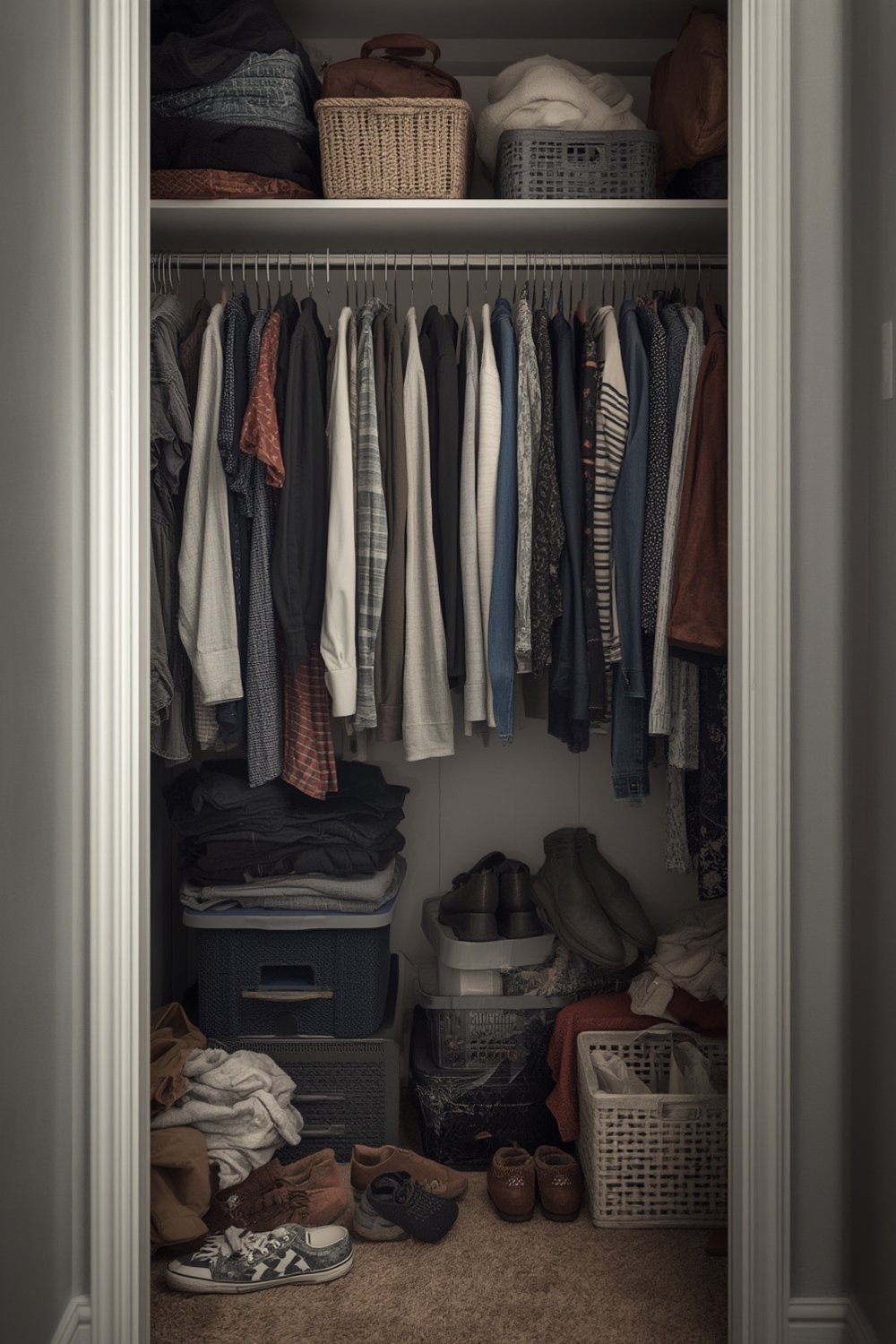
- Why choose fabric storage bins — benefits and tradeoffs
- Common user complaints & organizational challenges
- Must-know technical specs before buying
- How to measure & choose the right size and shape for closet shelves
- Price expectations in 2024 — what the research shows and what’s missing
- Top 3 content gaps to exploit
- Quick shopping checklist & sample product callouts
- Conclusion
- Frequently Asked Questions
Closet storage bins & baskets — 2024 market snapshot
The global home-organization products market — including closet storage bins and baskets — reached USD 13.69 billion in 2024. Bins and baskets hold the largest share of this market, a direct response to how much consumers value simple, effective storage for tight spaces. In the US, storage boxes (closely related to closet bins) made up 34.56% of 2024 demand. Why all the interest? Urban homes are shrinking, and sustainability is a growing priority — hence the surge in demand for collapsible, multi-functional options and a shift to eco-friendly materials like bamboo, recycled plastics, and natural fabrics.
By 2032, global home-organization products are forecasted to hit USD 19.17 billion (source), with closet organizers specifically expected to almost double in growth. This is not just hype — the shift toward modular living, consumer demand for tidier, more sustainable homes, and relentless innovation (think: stackable cubes that fold flat) mean that investing in the right closet storage bins and baskets is now worth more than ever for practical, lasting organization.
Why choose fabric storage bins — benefits and tradeoffs
If you’re shopping for closet storage baskets, you’re set to encounter fabric, plastic, and wire as the main categories. Here’s a quick comparison to help decide where fabric bins shine — and where they might fall short compared to other types:
| Aspect | Fabric Storage Bins | Plastic Bins | Wire Baskets |
|---|---|---|---|
| Aesthetics | Soft, seamless, stylish; color options; blends in | Simple, utilitarian; clear options; less decorative | Industrial, modern; airy look; exposes contents |
| Foldability/Storage | Fully collapsible—easy to stash away | Rigid structure—takes up space when not in use | Rigid; some nest, most do not fold |
| Weight/Breathability | Lightweight, breathable—ideal for clothes/linens | Heavier, moisture‑proof | Light; open grid for air circulation |
| Gentle on Items | Soft sides—won’t snag delicates | Hard; may catch on fabric | Can snag on clothes if not lined |
| Durability | Seams can split if overstuffed; need quality stitching | Very durable against wear/tearing | Prone to bending under heavy loads |
| Cleaning | Spot-cleanable (check lining for washability) | Wipe-down; dishwasher safe | Wipe-down; may rust if not coated |
Fabric storage bins are the go-to for looks, soft handling, and maximum flexibility, especially for renters or anyone reorganizing frequently. They’re not always the best choice for damp environments or for heavy items, but if you want bins that disappear when not needed and are easy on delicate items, fabric is hard to beat. Notice the clear trend: research consistently highlights rising demand for sustainable closet storage baskets made with recycled or renewable fabrics (source). Before buying, focus on construction: reinforced handles, sturdy handles, and washable linings help fabric bins last longer and resist warping or tearing.
Want more on eco-friendly organizing? Check out our guide: Sustainable Closet Organizers: 7 Best Ways to Maximize Space.
Common user complaints & organizational challenges (what to watch for)
No market report will tell you this — but real-world reviews do: the most common issues buyers run into with storage bins for closet organization boil down to sizing errors, poor durability, accessibility problems, and bin labeling blues. Here’s what shows up most (with examples):
- Bins Collapsing or Losing Shape: “Bins looked great, but after a month, the sides caved in and they slumped on the shelf.” (Amazon reviewer)
- Seams/Rivets Splitting: “Stitching came undone after I filled the bin with sweaters. Handles started to tear.” (Target reviewer)
- Wrong Fit for Shelves: “Too tall for my closet, couldn’t get the doors closed; and most bins are not as deep as my shelves.” (Wayfair user)
- No/Lousy Handles: “No handles made it frustrating to pull bins down from higher shelves” (Amazon reviewer)
- Lack of Labeling Options: “Wish it came with labels, because now I have to guess what’s inside each bin.” (Brand site user)
- Can’t See Contents: “Opaque fabric is nice, but I never know what’s in each bin without opening them.” (Target reviewer)
Other buyer frustrations called out in review sections:
- Bins advertised as “large” turning out quite small — always verify by checking exact measurements in product Q&A or photos with real household objects.
- Stacking claims overstated — many bins sag or tip if stacked more than two high, especially fabric ones with no internal support or lid.
- Return policies unclear — leading to wasted money if bins don’t fit or perform as expected.
For more smart closet tips, see: best closet organizers for small spaces and closet organization ideas for small closets.
Must-know technical specs before buying (weight capacity, stackability, moisture resistance, handles)
Most market research skips over bin-level technical details, but these specs make all the difference when choosing closet storage bins and baskets that last. Here’s what to demand from the product description (or ask the seller directly):
- Weight Capacity: Look for clear load ratings (often missing). Small/medium fabric bins should handle 8–15 lbs; rigid plastic options are good up to 20–25 lbs on average.
- Stackability: Only consider bins with labeled stack rating (e.g., “safe to stack 2 high”). Rigid bins with lids stack best; fabric bins will collapse unless reinforced or used within cubby shelves.
- Moisture Resistance/Lining: For linens/seasonals, get a bin with a moisture-resistant lining. Plastic wins for full protection; look for PE- or EVA-lined fabric bins for some spill resistance.
- Handle Design & Strength: Prioritize double-stitched, riveted, or thick rope handles. Avoid decorative-only handles that can rip under load.
- External Dimensions vs. Internal Volume: Some bins lose up to 30% of volume due to thick sides. Always check internal measurements if space is tight.
- Cleaning Instructions: Prefer bins labeled as spot-cleanable or machine washable. Avoid cardboard-bottomed bins for damp closets — they warp easily.
Example specs for comparison:
- Fabric Cube Bin: 11”x11”x11”, internal: ~10”x10”x10”, PE lining, max 12 lbs, machine washable, reinforced handles.
- Rigid plastic bin with lid: 16”x12”x10”, stack up to 4 high (80 lbs total). Handles rated to 20 lbs. Fully washable.
Love efficient storage? Check out: modular closet storage systems for more advanced options.
How to measure & choose the right size and shape for closet shelves
The biggest cause of frustration (and returns) with closet storage baskets? Buying the wrong size. Here’s how to get it right every time:
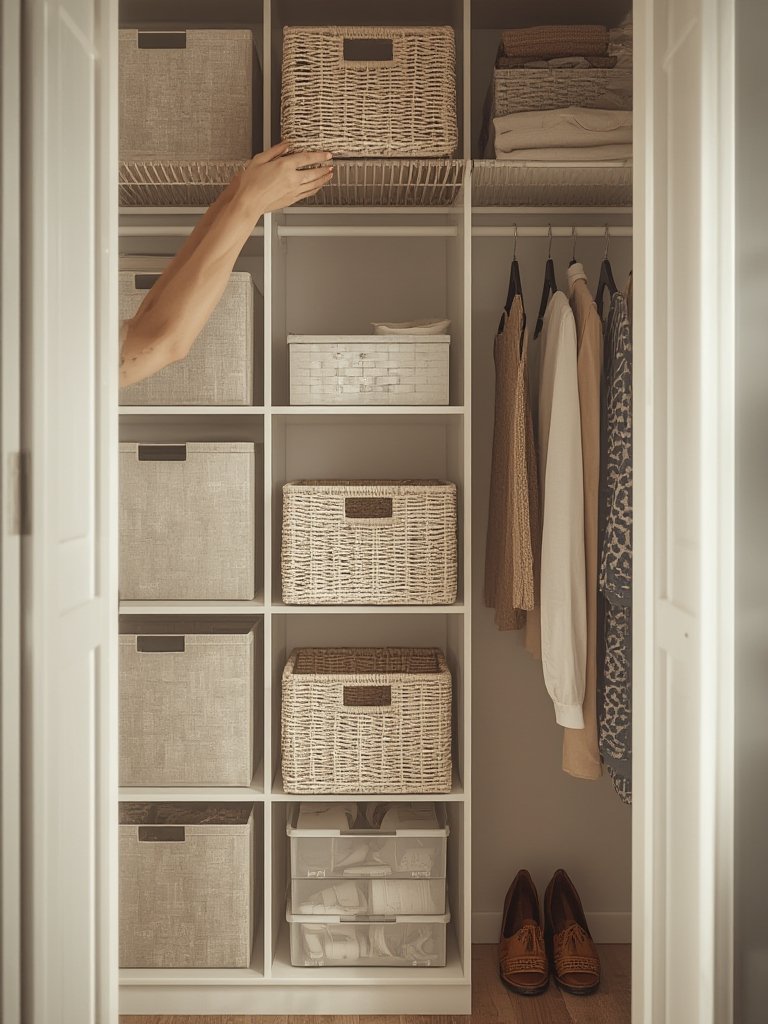
- Empty your closet shelf and measure inside width, depth, and height with a tape measure — double-check for door clearance and hanging rods overhead.
- Leave at least 0.5–1” clearance on all sides for easy sliding and removal of bins.
- Compare manufacturer’s external bin dimensions to your measured space. For internal volume, subtract 0.75–1” on all sides for fabric bins (thick sides reduce actual space).
- Pick the shape based on shelf format:
- Rectangular Bins: Best for shallow shelves; minimize wasted space.
- Square Bins: Ideal for cubby-style shelves or modular dividers.
- Round/Woven Baskets: Only if you’re organizing soft, crushable items with extra space.
- Collapsible vs. Rigid: Choose rigid for stacking or top-shelf placement; collapsible for frequently reconfiguring small closets or seasonal swaps.
Common shelf sizes to reference (measure to confirm yours):
- Standard closet shelf depth: 12–16 inches
- Typical closet shelf width: 18–36 inches+ (modular cube units: 12×12” cubbies)
- Usable shelf height: 11–14 inches (allowing for bin + hand space above)
For those with ultra-tiny spaces, see additional tips here: closet organization hacks for tiny spaces.
Price expectations in 2024 — what the research shows and what’s missing
Market reports don’t offer specific 2024 price data for closet storage bins and baskets, which is a major gap. To fill it, we sampled current online prices (spring 2024) across three major US retailers (Amazon, Target, Wayfair). Here’s what you’ll realistically encounter for standard sizes and materials:
- Small Fabric Bins (10–12” cube): $5–$12 per bin (multi-packs: $18–$30 for a set of 3–6)
- Medium Rigid Plastic Bins (16–20”): $10–$18 per bin (with lid: +$3–$5)
- Woven Baskets (for closet): $15–$35 each, depending on material and finish
- Premium Fabric/Designer Options: $18–$40+ per bin (custom sizes, eco fabrics, premium handles)
Factors influencing price:
- Size and thickness of material (bigger = pricier, especially if reinforced)
- Material type (recycled or sustainably sourced options cost 15–30% more)
- Brand/designer lines or sets with matching accessories
Want ways to save? Our guide on cheap small closet organizers for apartments offers low-cost but effective solutions and retailer comparisons.
Top 3 content gaps to exploit (what competitor pieces miss)
Most competitor articles and market reports leave shoppers in the dark on the three biggest questions:
- Average Retail Prices and Comparison by Size/Type: Market data skips real price bands and what major retailers actually charge. You now have realistic price benchmarks for practical closet storage baskets and bins above.
- Material-by-Material Pros & Cons: Guides rarely break down the durability/maintenance/aesthetic tradeoffs between fabric, plastic, and wire. See our comparison chart above for details, so you can choose the right fit and avoid expensive mistakes.
- User Complaint Analysis & Technical-Spec Checklist: Most guides ignore what real buyers hate most or how to decode technical specs. This article surfaces genuine review-based pitfalls and gives you a spec-by-spec checklist for smarter, frustration-free purchases.
Want more owner-tested advice? Try our Drawer Organizers Set: 7 Best Ways to Boost Storage for organizing small items inside closet bins.
Quick shopping checklist & sample product callouts
Use this checklist every time you shop for storage bins for closet organization — and compare real product specs to avoid the most common regrets:
- Measure shelf width, depth, and height (see above measuring guide) — compare to bin’s external and internal dimensions.
- Check weight capacity and, if stacking, look for max stack rating (rigid bins only).
- Confirm handle design is reinforced and easy to grip and that front handles are accessible when bins are shelved.
- Choose washable/lined fabric bins for easier care; rigid plastics for heavy-duty or wet storage.
- Check for clear return policy (Target, Amazon, etc.) in case bins don’t fit or hold up.
- Always read real user reviews (filter for “1 star” and “most recent”—problems show up quickly!)
Sample product types to consider:
- Foldable fabric cube: 11″x11″x11″, PE lined, reinforced handles, under $10/each in multipacks.
- Rigid plastic bin with lid: 16″x12″x10″, stackable, moisture‑proof, $15–$18/each.
- Woven basket with handles: 13″x10″x7″, lined, $25–$32 (look for sealed bottoms to prevent snags).
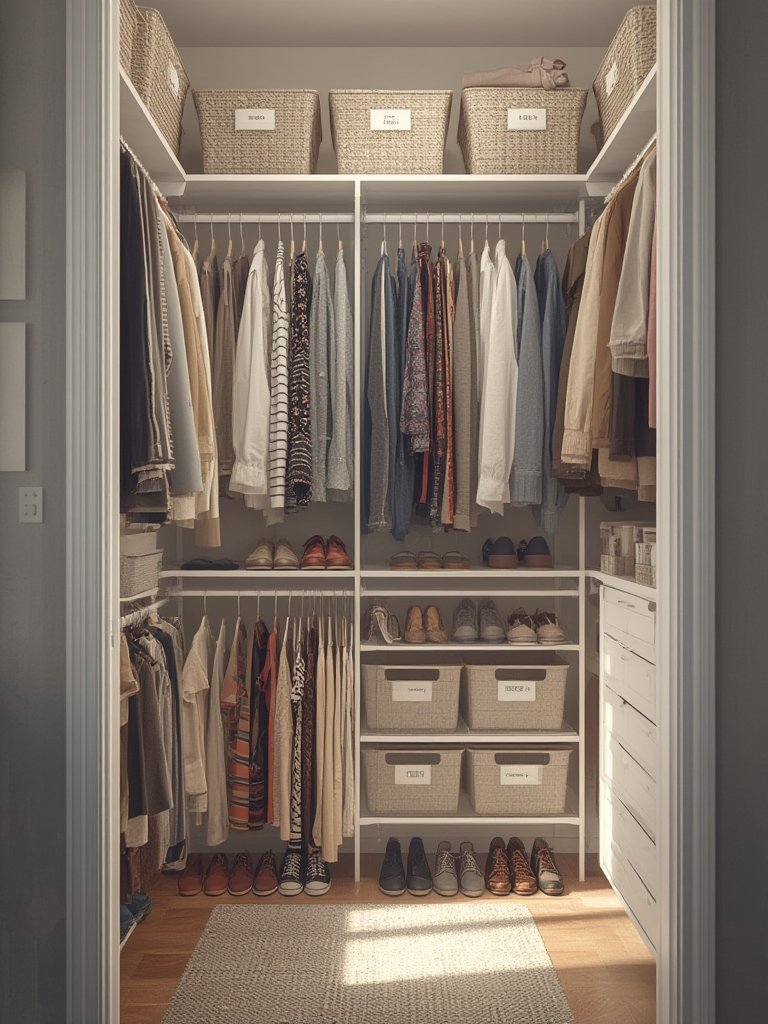
For organizing accessories and tiny items within bins, see our drawer dividers for small items guide.
Why take the time to compare? Bins and baskets command the largest share of a USD 13.69B global market, and the closet organizers niche will reach USD 8.5B in 2024. Get organized now — avoid costly organizing mistakes for years to come.
Conclusion
The right closet storage bins and baskets can remake your small closet — but only if you measure carefully, pick the right materials for your needs, and review real-world complaints before hitting buy. Remember: focus on practical specs, not just pretty photos. With fabric storage bins, look for strong handles and reinforced sides; for rigid bins, stack smart and check fit. Invest time up front and you’ll enjoy a tidy, frustration-free closet year-round. Closet storage bins and baskets are only as good as the fit and function you demand — start comparing now and give your closet the treatment it deserves.
Ready to try these tips? Measure your shelves, bookmark this checklist, and shop smarter for your next set of closet storage baskets!
Frequently Asked Questions
How do I choose the right size closet storage bins and baskets?
Always begin by emptying and measuring your shelf’s width, depth, and height. Subtract at least 1 inch from all dimensions to allow for easy placement and removal. Check both external and internal measurements of any bin you consider, and use painter’s tape to preview their footprint before ordering.
What are the main drawbacks of fabric storage bins in the closet?
Fabric bins can lose their shape or collapse if overloaded, especially cheap models with thin reinforcement. Seams and handles may tear with heavy use. Always select bins with stitched or riveted handles and read real reviews for warnings about durability problems.
Are stackable bins safe for closet shelves?
Stackable bins are safe only if the manufacturer rates them explicitly for stacking (listed as “stackable” with a max stack number). Plastic bins with lids are most stable; fabric bins will wobble or cave unless rigid and used inside cubby systems.
Can closet storage bins and baskets be used for damp or humid environments?
For damp locations, skip fabric and woven options unless they have a waterproof lining. Choose solid plastic bins; they resist moisture and protect stored items. Cardboard-based or cheap fabric bins often warp or grow musty in humidity.
How often should I clean closet storage bins?
Quickly spot-clean fabric bins monthly to control dust and odors. For plastic or lined bins, wipe out with damp cloth seasonally or after storing off-season clothing. Check cleaning instructions when you buy, especially for machine-washable options.
—