Space-saving closet ideas are now a daily necessity for renters living in small urban apartments. With apartment sizes shrinking and closet storage at a premium, smart, non-permanent organization has never mattered more. Whether you’re in a studio or a one-bedroom under 750 square feet, you need actionable, landlord-friendly solutions that work today—without wrecking your deposit.
Key Takeaways
- Urban apartments are getting smaller, creating urgent demand for renter-first, non-permanent closet optimization solutions.
- Focus on affordable, fast-to-install space-saving closet ideas that don’t require drilling or landlord permission—think tension rods, over-the-door racks, and portable wardrobes.
- Measuring your closet gains before and after upgrades ensures your time and investment pay off in usable storage and peace of mind.
- Why space-saving closets matter right now
- Common closet pain points in small living spaces
- Quick, high-impact space-saving closet ideas (actionable list)
- Prioritizing solutions by impact vs. permanence (renters-first decision guide)
- Cost-effective materials, modular systems and typical price ranges (research gaps + what to research)
- Measuring success — simple before/after metrics to include
- Durability and maintenance: what to choose to reduce upkeep
- How renters typically navigate landlord restrictions (practical tactics)
- Top 3 sub-topics many articles overlook — must-cover sections
- What this research could not tell us (limitations & where to source missing data)
- Suggested tone, format, and supporting assets
Why space-saving closets matter right now
Urban life keeps getting tighter, literally: average city apartments are now just 649 sq ft in Seattle and 668 sq ft in Portland, according to 2024 RentCafe data. Most studios come in at 457 sq ft; one-bedrooms at 735 sq ft. Space constraints are tightening with each new building cycle.
This means more renters are forced to rethink every inch of their closets. Not surprisingly, built-in ($29.15B in 2024) and custom closet systems ($31.43B in 2025) are booming. However, these permanent options aren’t viable for most renters. That’s why closet space optimization—using removable, non-destructive hacks—is a market imperative. Renters need cost-effective, high-impact space-saving closet ideas that work fast and move with you.
Common closet pain points in small living spaces
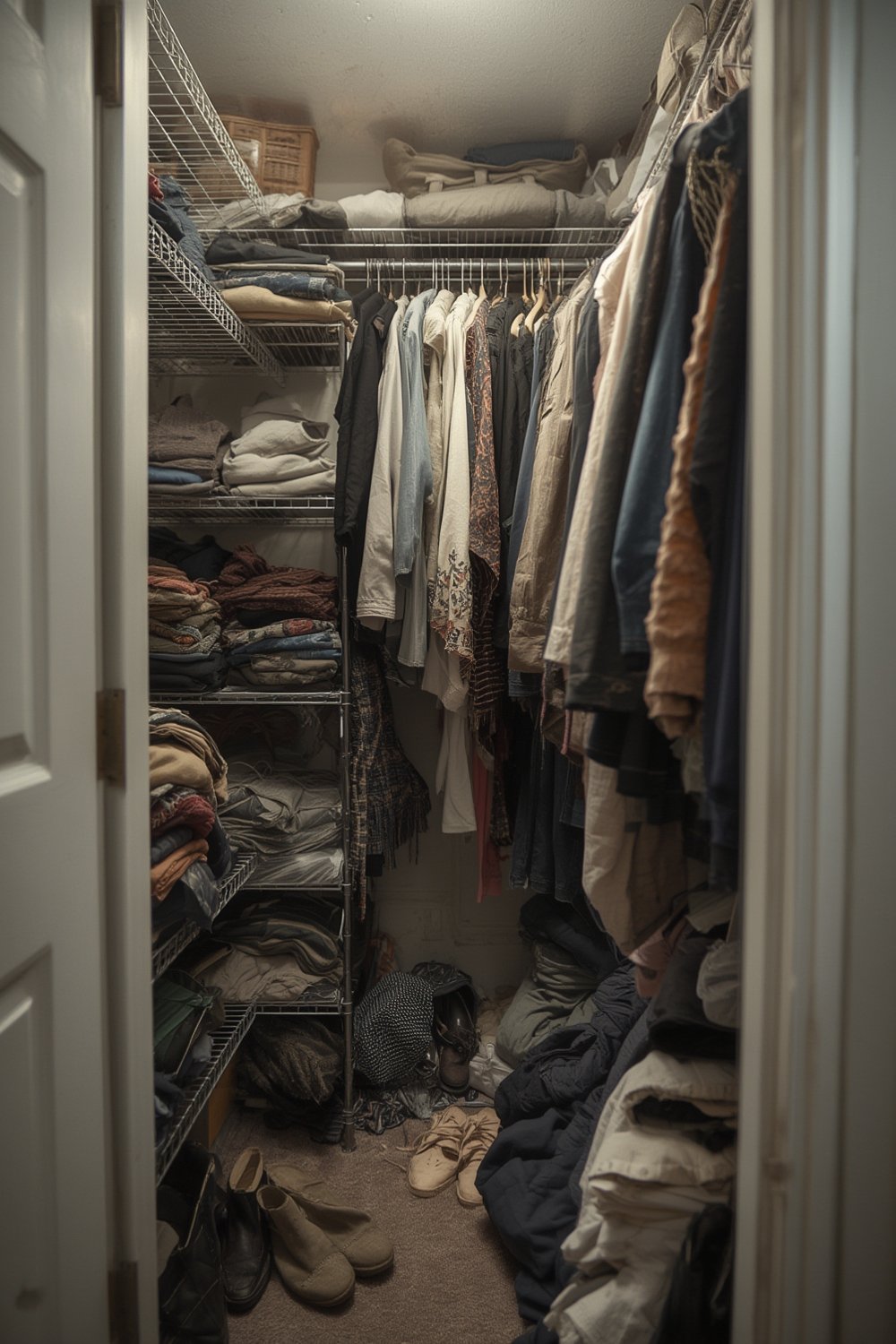
Most renters living in urban studios or one-bedrooms run into the same issues:
- Not enough hanging space for clothes and coats
- Overloaded single-shelf systems with wasted vertical room
- Poor use of back-of-door and corner zones
- Lack of visibility making it hard to find items fast
- No modularity—hard to adapt or expand storage
- Hacks not allowed due to strict “no modifications” rules in leases
According to industry research, there’s a surge in demand for reach-in wardrobes and modular units—direct evidence that traditional closet layouts don’t work for today’s compact floorplans. The need for small closet hacks and efficient closet storage solutions is real, and growing.
Quick, high-impact space-saving closet ideas (actionable list)
Ready to take action? Every item below is landlord-approved and can be installed in under 30 minutes, no tools or permission required:
- Slim velvet hangers: Replace plastic or wire hangers to fit up to 40% more clothing. Non-slip.
- Double-hang tension rods: Install a second rod (spring-loaded) for pants or shirts. No drilling.
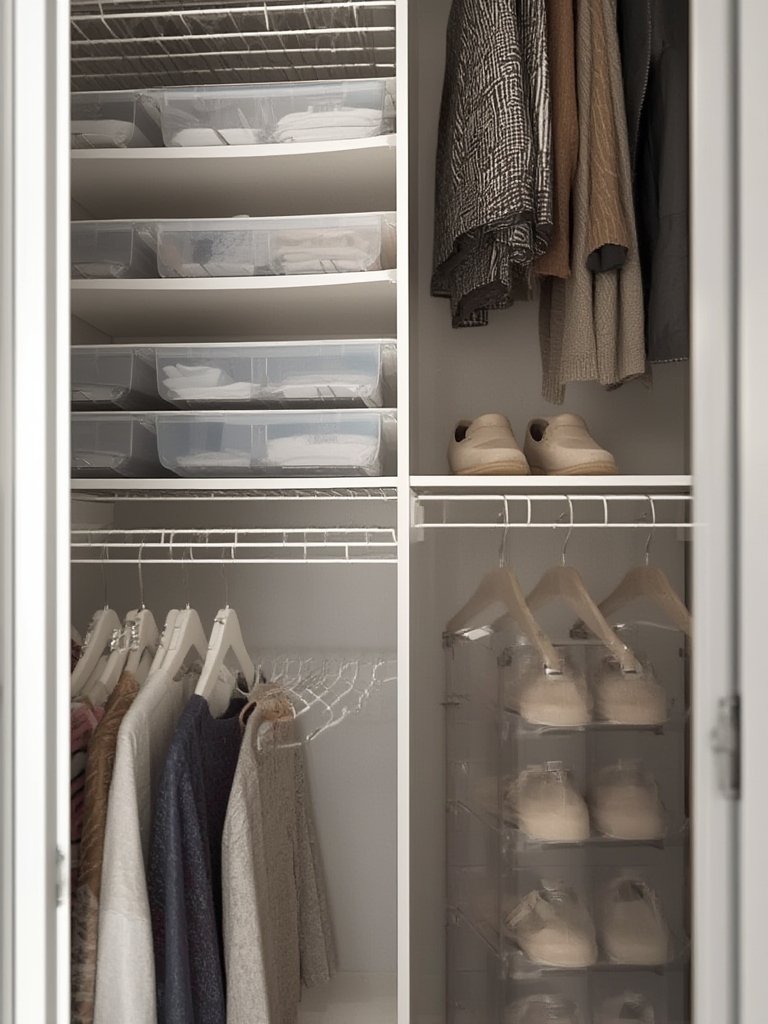
- Over-the-door organizers: Hang clear shoe pockets, mesh baskets, or even a small mirror behind closet or bedroom doors. Boosts access for small items—perfect for renters.
- Vertical stacking cube organizers: Stack on the floor or shelf to use height for shoes, bags, or folded sweaters. Look for modular, tool-free options (many under $30).
- Under-shelf wire baskets: Hook onto existing shelves to double usable space for folded shirts, socks, or belts without permanent mounting.
- Vacuum storage bags: Store bulky jackets or bedding flat under your bed or in the back of your closet. Cuts clothes volume by up to 70% according to most product claims.
- Magnetic and adhesive hooks: Hang bags, robes, or hats on closet walls or doors. Removable brands like Command leave no trace.
- Freestanding portable wardrobe racks: Perfect when closets can’t be modified and you need instant extra hanging or shelf space. Breaks down flat for easy move-out.
- Drawer and shelf dividers: Tame messy piles with non-slip, expandable dividers—great for renters and covered in this guide on how to use drawer dividers.
- Cubby storage bins or baskets: Use labeled bins for extra shoes, accessories, or seasonal wear—easy to swap in and out and keep clutter off the floor.
- Multi-use furniture with hidden storage: Ottomans, benches, or beds with drawers (see our under-bed storage solutions) offload overflow from your main closet.
Note: No published studies report specific before/after space savings for these hacks—user reviews and some product listings suggest up to double the usable volume, but actual gains will vary. Always document the difference yourself for better results.
Looking for more? Explore our picks for best closet organizers for small spaces and tips on no-drill closet organizers.
Prioritizing solutions by impact vs. permanence (renters-first decision guide)
As a renter, every closet improvement has to balance cost, ease, impact, and reversibility. Here’s a quick decision matrix:
| Solution Type | Impact | Permanence | Typical Rental-Friendly? | Example Products/Ideas |
|---|---|---|---|---|
| Freestanding / Portable | High | Low | Yes | Portable wardrobes, cube shelving, freestanding racks |
| Tension-Based Add-Ons | Medium-High | Very Low | Yes | Tension rods, over-the-door racks |
| Adhesive/Magnetic Accessories | Medium | Low | Yes | Command hooks, adhesive shelves |
| Built-In / Custom Installs | High | High | No (usually) | Custom closet systems, wall shelving |
| Multi-Use Furniture | Medium | None | Yes | Beds w/ drawers, storage benches |
Market data confirms rapid growth for wardrobe units and portable, flexible closet organizers among renters (see here). Always prioritize solutions you can remove fully without damage—or, if you want to pitch a permanent upgrade, offer your landlord a detailed restoration plan.
Cost-effective materials, modular systems and typical price ranges (research gaps + what to research)
What materials or products offer the best balance of affordability, quality, and adaptability for renters in 2024? Research didn’t provide concrete data, but here’s where to start your search (with average price ranges pulled from recent online listings):
- Tension-rod double-rod systems: $15–$40, no tools required
- Freestanding modular wardrobes: $40–$200 (entry to premium, IKEA/Wayfair brands)
- Stackable cube organizers: $20–$60 per 6-cube set
- Wire over-the-door racks: $12–$40 (less for basic tiers, higher for adjustable)
- Slim velvet hangers: $15–$30 per 50-pack (see top-rated options on Amazon)
- Vacuum storage bags: $15–$35 for a set of 6–10
- Expandable drawer/shelf dividers: $12–$30 per set (read our guide on drawer organizers for options)
Compare prices between big-box retailers, IKEA, Amazon, and local discount outlets. Target budget lines for basics; go premium if you need heavy-duty weight capacity or want a sharper aesthetic. For more modular systems, see modular closet storage systems (a must for renters who move often).
Measuring success — simple before/after metrics to include
How do you know if your space-saving closet ideas really worked? Research shows few studies measure before and after efficiency, so document results yourself:
- Count total hangable items before and after (shirts, dresses, suits)
- Measure shelf linear feet used (total shelf length covered by baskets/boxes)
- Number of shoe pairs stowed before/after using organizers
- Square feet of closet floor reclaimed (by moving bins off the floor via hanging/vertical solutions)
- Quick visual photo audit (phone pics before/after each change)
Create a basic audit sheet:
Before: Items hung ____   Shelf feet used ____   Shoes stored ____   Floor clear? Y/N
After:  Items hung ____   Shelf feet used ____   Shoes stored ____   Floor clear? Y/N
Photos attached: _______
Tracking your closet’s transformation helps you dial in what works—and avoid unnecessary spending. For more audit templates, check out our guides on closet organization.
Durability and maintenance: what to choose to reduce upkeep
Product listings and user reviews highlight a few standout choices for efficient closet storage solutions that last:
- Metal-coated or powder-coated wire shelving: Rust-resistant and easy to wipe down, much sturdier than plastic alternatives.
- Laminated MDF or composite wood: More stable and stain-resistant than raw wood. Look for edge-banding—prevents chipping.
- Washable fabric bins: Choose bins with reinforced sides and washable liners for durability—avoid thin canvas bags that collapse with weight.
- High-strength adhesive and tension products: Many renters report repeat success with Command-brand hooks or double-wide tension rods, as long as installed per directions.
Maintenance is simple: Declutter quarterly, dust shelves and rods, and check that straps, hooks, and bins still feel stable. Top-rated brands (as per Amazon and IKEA user reviews) beat knock-offs for both weight capacity and longevity—but even budget options hold up when not overloaded. For more on sustainable upkeep, see sustainable closet organizers.
How renters typically navigate landlord restrictions (practical tactics)
Smart city renters swear by these tactics for getting around strict “no modification” rules:
- Freestanding racks or portable wardrobes: Offer extra storage when closet access is tight or built-ins can’t be changed.
- Tension rods and removable double rods: Provide layered hanging in tight spots with zero wall damage.
- Adhesive and Command-mounted organizers: Hooks and shelves that peel away cleanly (always test on discreet surface first).
- Magnetic organizers: Great for metal doors or appliances—hold keys, small tools, even kitchen bins when closet space is too tight.
- Proactive permission requests for semi-permanent upgrades: Email your landlord with details about your reversible install and offer a written restoration plan.
Sample permission email template:
Subject: Request for Approval – Temporary Closet Organizer Upgrade

Hi [Landlord Name],

I’d like to add a removable [describe product, e.g., “tension-rod hanging shelf”] to my closet. This won’t require drilling or create any permanent marks. If any wear/results occur, I’ll restore to original condition before move-out.

Thank you for considering!
Best,
[Your Name]
Tenant tip: Snap pre/post-installation photos so your restoration plan is clear. For more guides on non-invasive solutions, see no-drill closet organizers for renters.
Top 3 sub-topics many articles overlook — must-cover sections
- Vertical “dead-zone” optimization:
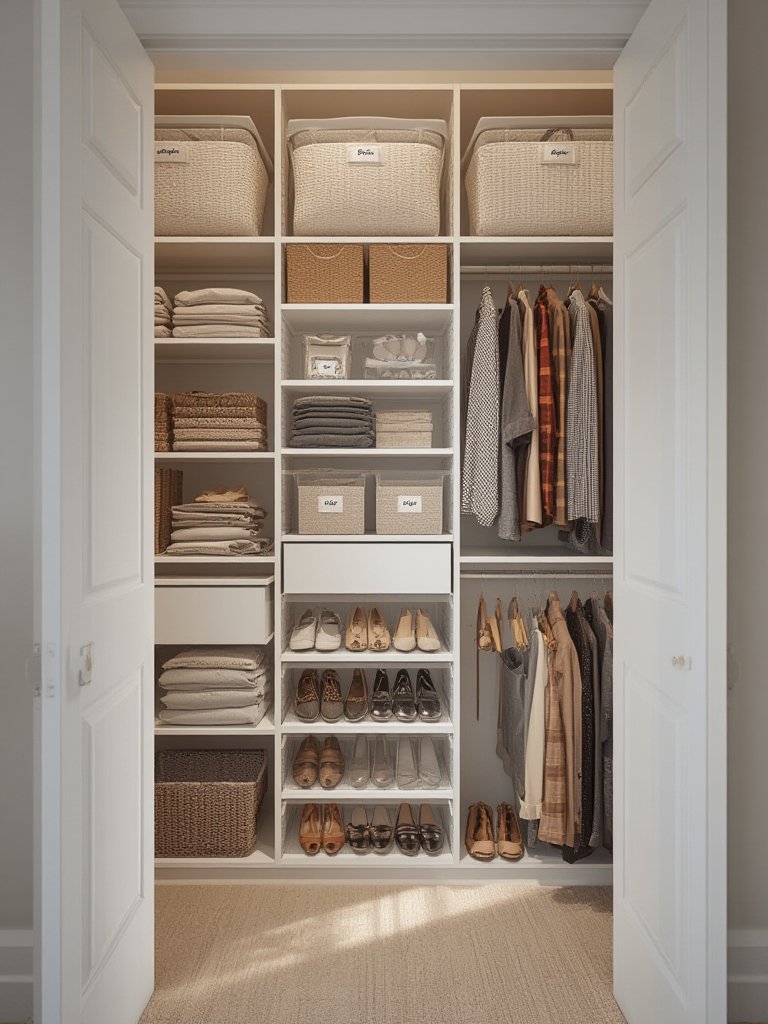
- Use the topmost shelf by adding clear bins on labeled risers—store low-use items and maximize headroom.
- Invest in multi-tier tension rods or hanging shelves to break up tall empty space.
- Design patterns: Stagger cubbies or use angled brackets to fit irregular closet walls—install and remove tool-free.
- Seasonal rotation and garment care workflow:
- Rotate clothes by season (e.g., winter coats in vacuum bags under bed in summer).
- Use cedar blocks or silica packs to prevent mildew in tight bins.
- Space velvet hangers at least ½” apart to keep garments shaped and wrinkle-free.
- Multimodal furniture integration:
- Beds with drawers, entry benches with hidden bins, or vertical bookshelves as closet-offloading solutions.
- Room dividers with built-in cubbies can carve out both privacy and storage in studios.
- See our top picks for under-bed storage for real-world examples.
User forums and urban rental Reddit threads regularly praise these rarely-covered tips—especially vertical “dead-zone” hacks that reclaim invisible space. Want more? Don’t miss our expandable drawer organizer strategies.
What this research could not tell us (limitations & where to source missing data)
Even the best research leaves a few blanks. Here’s what we still don’t know for sure—and how to source what’s missing:
- No direct 2024 statistics on average closet sizes—use apartment square footage averages as a proxy.
- No published efficiency gains (percent-based) for most popular hacks—document your own with audits and photos.
- No comprehensive product pricing or durability breakdowns—compare Amazon, IKEA, and Walmart listings and read current user reviews.
- No longitudinal studies on renter-specific strategies—mine real stories from Reddit, DIY forums, and small-space Instagram/TikTok accounts.
- No expert assessments of durability for budget vs. premium products—focus on shopper ratings and “repeat-buy” user comments.
To make the smartest upgrade decisions, supplement guides like this with:
- Review sites for comparison shopping
- Product Q&A or unboxing videos on YouTube
- Renter forums and crowdsourced small-space tips
- Manufacturer spec sheets for true load limits
Suggested tone, format, and supporting assets
Your results will be best when you take a clear, empathetic, and solution-first approach. Focus every section on reader outcomes, not hype. Here’s what we recommend:
- Tone: Realistic, practical, and direct—speak to renter pain points and highlight where ideas will (and won’t) work.
- Format: Short intro, problem/market framing, actionable hack list with photos/diagrams, easy decision matrix, product picks for budget/mid/high, checklists, and before/after audit templates.
- Supporting Assets:
- 6–8 product links and price points
- 3–5 mini-case studies (before/after, user quotes, photos)
- Editable templates for quick audit and landlord permissions
Don’t hesitate to combine ideas from this page with our other resources on closet drawer dividers or smart closet organizer tech for the most tailored and efficient closet space optimization possible—no matter your rental constraints.
Conclusion
Small apartments require smart, flexible, and renter-friendly solutions. When you apply practical space-saving closet ideas like tension rods, stacking organizers, and vertical dead-zone hacks—paired with before/after auditing—your closet transforms from chaos to calm, often in just a weekend. Start small, measure your wins, and keep future flexibility in mind. Ready to claim back your space? Share your own closet wins or check our latest renter-first organizer picks below!
Frequently Asked Questions
What’s the fastest way to double my closet storage as a renter?
Adding a tension rod to double your hanging space, then switching to slim velvet hangers, can boost usable area instantly—without tools or permission needed.
Are adhesive and magnetic hooks safe for closet doors?
Yes—high-quality removable hooks (like Command or 3M) come off cleanly if you follow package directions. Test a small area first and avoid overloading lightweight doors.
Can I ask my landlord for permission to install shelves or rods?
Absolutely. Outline your plan in an email, promise to restore any changes at move-out, and offer to send photos. Many landlords appreciate improvements that add value or look professional.
How do I stop my closet from getting musty or overcrowded?
Rotate out-of-season items into vacuum bags under the bed, use cedar blocks for freshness, and declutter every few months—donate or store items you rarely wear.
Where can I find more small closet hacks or product reviews?
Head to our detailed guide here or explore reviews for drawer organizers to see what real renters recommend.
—