Table of Contents
Cheap small closet organizers for apartments are a must if you’re a renter trying to make the most of a tiny space without overspending or putting your security deposit at risk. Let’s break down practical, renter-friendly closet organization steps that maximize durability and space while keeping your costs low—and ensure you don’t fall into the usual traps other apartment dwellers face.
Key Takeaways
- Budget-friendly closet organizers in 2025 range from $36 to $171; smart buyers stick under $100 for basic kits and $100–$200 for modular upgrades.
- Metal wire systems (like Rubbermaid) offer superior durability and adjustability, while no-drill fabric and plastic units work for ultra-low budgets but have lower weight limits.
- Biggest pitfalls: not measuring, ignoring weight limits, and skipping wall/floor stability—these mistakes cause the most product failures and wasted money.
- Quick price-and-feature snapshot for small-apartment closet organizers
- How to pick and install cheap apartment closet organizers (step-by-step)
- Advanced analysis & common pitfalls (plus how to avoid them)
- Conclusion: Smarter buying, fewer headaches
- FAQs: Cheap Small Closet Organizers for Apartments
Quick price-and-feature snapshot for small-apartment closet organizers
If you’re hunting for cheap small closet organizers for apartments, here’s what to expect by budget tier in 2025.
Grab this price ladder before scrolling further so you don’t overspend or miss the best option for your closet size and tool tolerance.
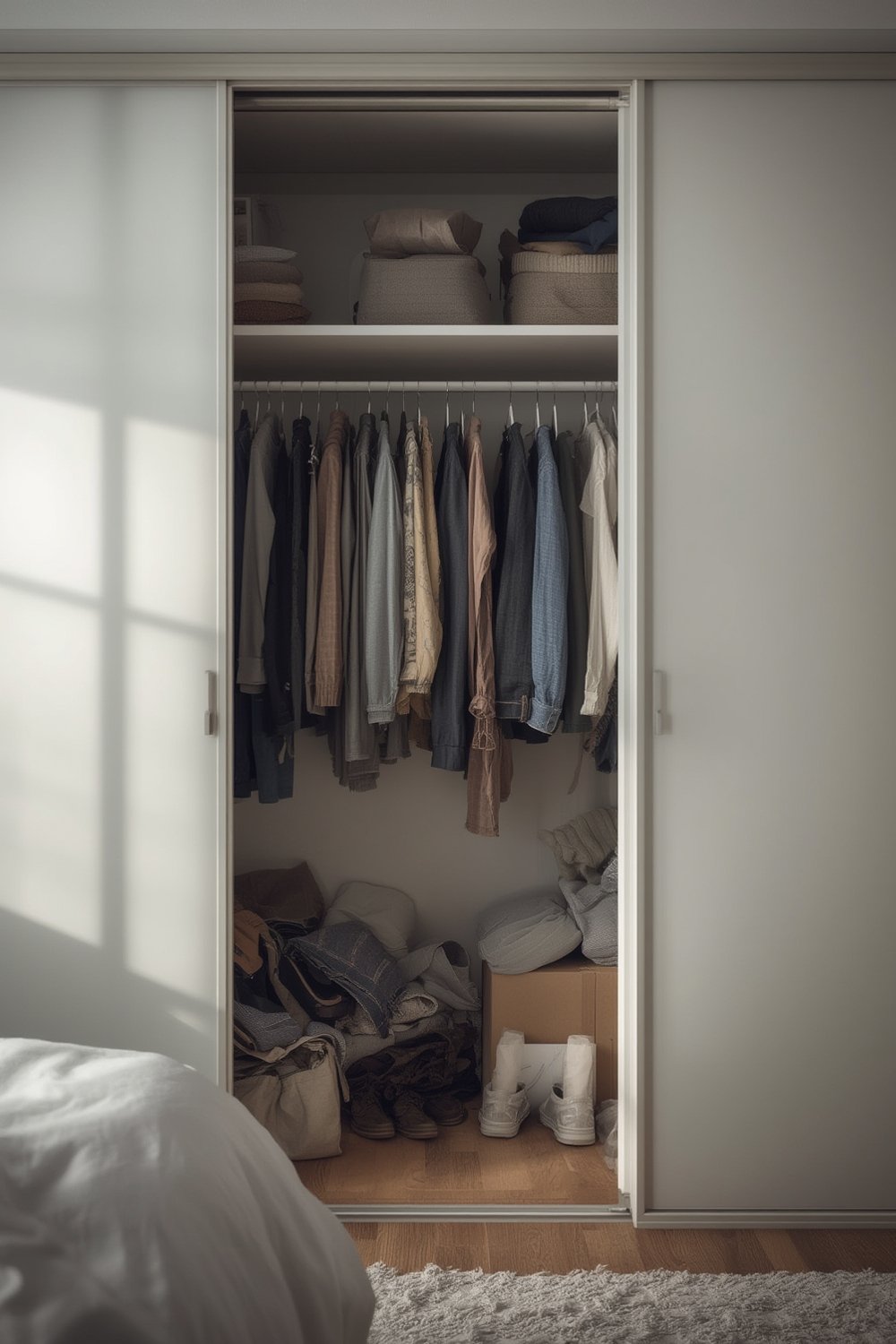
- Under $50: Fabric/polyester shelves, basic free-standing or hanging wire frames (e.g., Whitmor Freestanding at $36). No tools, 5-pound shelf limits—great for light shoes/accessories, poor for heavy items. See detailed reviews here.
- $50–$100: Starter wire kits (Rubbermaid Custom at $95) add proper shelving, adjustable rods, better weight capacity (often 60–100 pounds per rod). Still mostly renter-friendly, tool-free modular setup. See also Good Housekeeping’s budget picks.
- $100–$200: Modular “grow with you” systems (e.g., Rubbermaid Configurations Deluxe at $171; ClosetMaid Selectives starting $129). Mix telescoping poles, height-adjustable shelving, optional drawers, tool-free reconfiguration—good if you plan to move or upgrade in the future.
Most renters should expect to pay under $100, but if you need durability or want reconfiguration options, stretching to $120–$180 brings added value. For a deep dive on modular options, see our guide to modular closet storage systems: 7 amazing ways to maximize space.
How to pick and install cheap apartment closet organizers (step-by-step)
Don’t just buy the first kit you see. Here’s a streamlined, actionable process that avoids the most common renter headaches.
- Set your budget: Decide if you’ll stay under $50 (for portable/fabric or very basic wire), $50–$100 (starter wire/metal kits), or up to $200 for modular mega-flexibility.
- Pick your style: No-drill standalones are best for ultra-temporary solutions, and no-drill closet organizers for renters show the best picks. For bigger storage, opt for wire kits (Rubbermaid, ClosetMaid) that allow retooling/resizing later with minimum holes.
- Check weight needs: Know if you’ll be storing suitcases, heavy coats, or mainly shoes/accessories. Whitmor-type fabric: 5 pounds/shelf. Metal kits: 60–100 pounds/shelf. Don’t overestimate—closets fail here.
- Buy for adaptivity: Choose kits that allow tool-free reconfiguration, especially if you’ll move apartments. Rubbermaid Custom and Wayfair Basics are good bets.
- Set up in smart sequence:
- Start with no-drill option (if chosen).
- For wire systems, loosely assemble all shelves/rods on the ground first. Confirm with tape/measure. Only install when you’re sure all parts fit—this prevents unnecessary holes.
- Always anchor heavier systems into studs when possible. Use a stud finder (or the knock test) and never trust drywall anchors with full loads.
- Level shelves carefully—crooked setups are the most common (and most visible) rookie error.
- Check door swing and airflow before loading with clothes/shoes.
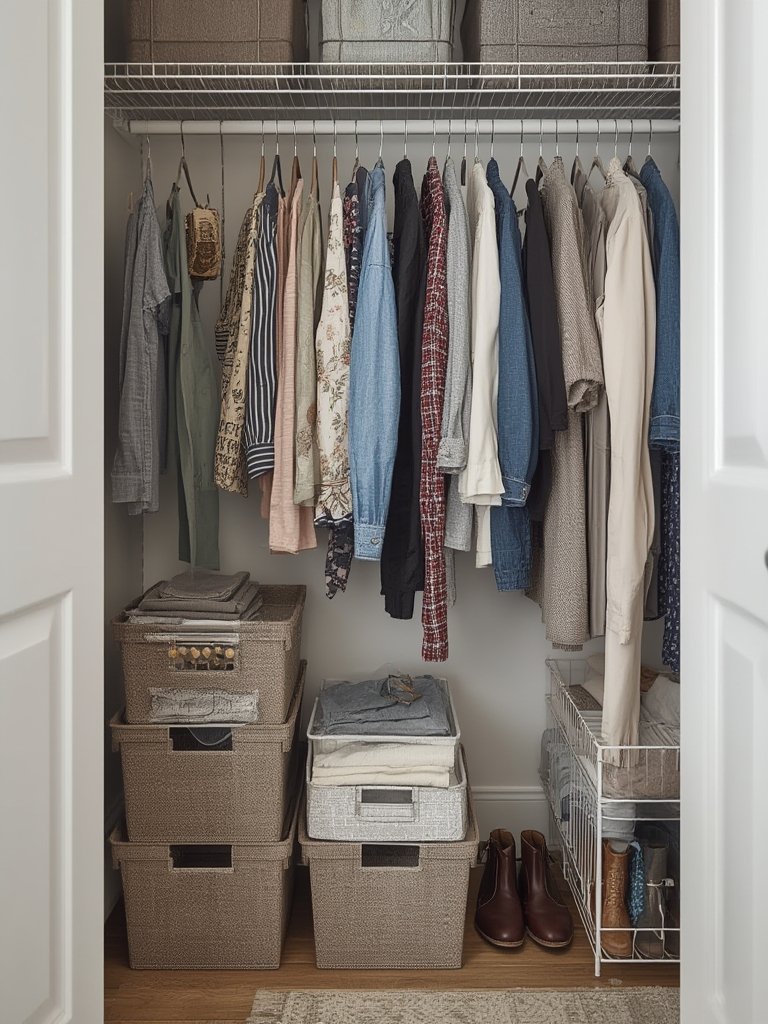
Bonus product ideas most guides miss:
- Elfa narrow mesh drawer stacks—use for vertical shoe/accessory storage in closets too shallow for traditional drawers. Pricey new, but used sets often pop up under $100. (see Container Store for specifics)
- like-it small modular drawers—compact, plastic, and designed to stack “gapless” in tiny footprints, perfect for small apartments. Avoids clunky overhangs of standard bins.
- Chrome vertical multi-hooks—these hang purses, shoes, or hats along the closet rod without using shelf space, often $15–20 for a pack; an instant win for crowded apartments.
Don’t forget: you can combine these micro-solutions with your main system for maximum space efficiency. Check space-saving closet ideas for more vertical hacks.
Advanced analysis & common pitfalls (plus how to avoid them)
Even the best budget-friendly closet organizers and low-cost closet solutions can disappoint if you miss these real-world problems.
- Assembly woes: ClosetMaid Adjustable and similar systems frustrate buyers with complicated instructions—watch product-specific videos before choosing. For renters with no tools or patience, stick to snap-together or tension-rod solutions instead.
- Weight failures: Whitmor-style shelves only handle shoes and soft items. Overloading (especially on upper shelves) causes warping or total collapse. Always check shelf limits and distribute heavy items low and wide, not up high.
- Wasted space: Fixed-width organizing towers leave gaps in most small apartment closets—especially if your closet width is uneven or not standard. Adjustable/modular is always safer than fixed. See our top small space organizer picks for more tailored brands and kit reviews.
- Unstable setup: Many renters discover too late that their kit can’t be safely secured without damaging walls. For wall-mounted kits, find studs—not just drywall—and use rated anchors.
- Material disappointment: Fabric and plastic shelves cost less, but they sag quickly and don’t adapt well to movers or repeated assembly/disassembly. Metal wire (Rubbermaid, Amazon Basics) is best for anyone who moves yearly or changes storage needs often.
- Metal/wire shelves: up to 100 lbs, resistant to sagging, highest renter satisfaction (source).
- Laminate (ClosetMaid Selectives): solid middle ground, easier to widen with add-on towers.
- Fabric/plastic: cheapest but only for seasonal or lightweight loads (usually 5-pound shelf max).
| System | Install Time | Tools Needed | Weight Limit | Best For |
|---|---|---|---|---|
| Whitmor Freestanding (~$36) | 10–20 min | None | 5 lbs/shelf | No tools, temp use |
| Amazon Basics Metal Rack (~$63) | 15–20 min | None | 100 lbs/shelf | Heavier loads, semi-permanent |
| Rubbermaid Custom (~$95) | 30–60 min | Minimal (screwdriver, stud finder) | 60+ lbs/shelf | Starter modular, easy upgrade |
| ClosetMaid Selectives (~$129+) | 60–90 min | Drill/screws | 60+ lbs/shelf | More robust, bigger closets |
For in-depth drawer storage, explore our review of drawer organizers set: 7 amazing ways to maximize space.
Conclusion: Smarter buying, fewer headaches
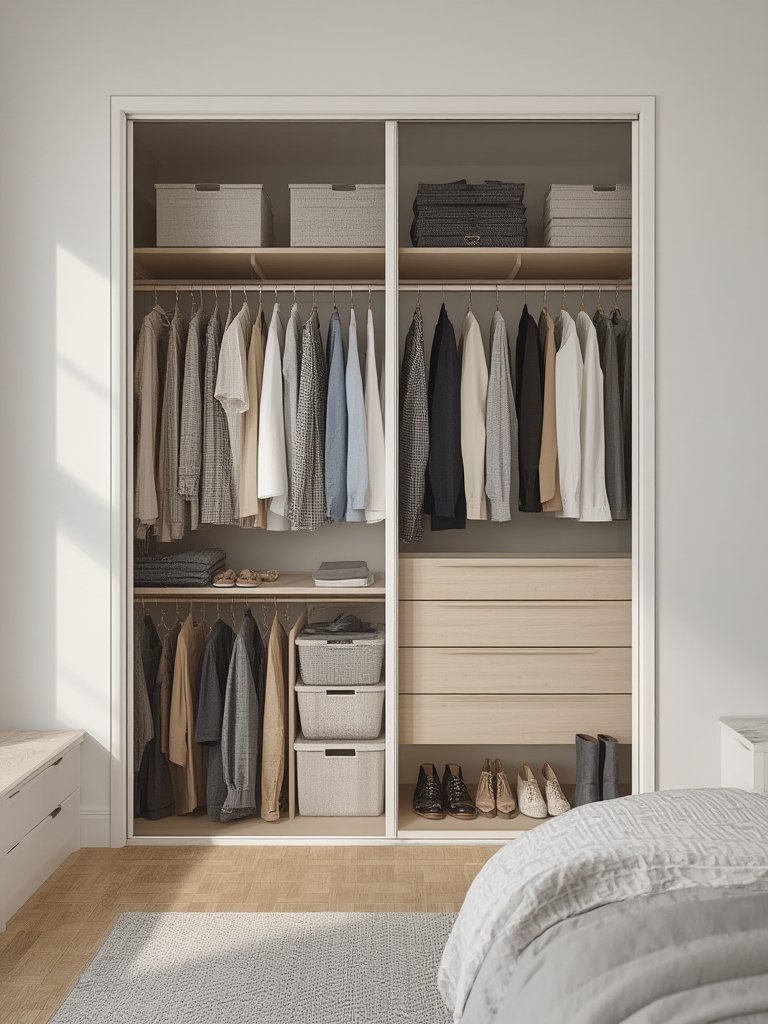
Don’t waste money and time on closet organizers that don’t last, fail with heavy loads, or won’t fit your rental. Cheap small closet organizers for apartments work best when you measure first, respect stated weight limits, and choose systems with proven renter satisfaction. For most, spending just a bit over $50 unlocks options that can move, adjust, and grow with you—no advanced DIY needed.
Ready to take action? Grab a tape measure now, decide if your priority is lowest price, max durability, or future-proofing, and order your kit or micro-hangers before your clutter piles up again. Your closet—and your future self—will thank you.
For more inspiration, check out our guide to closet organization ideas for small closets and sustainable closet organizers if you want planet-friendly options.
FAQs: Cheap Small Closet Organizers for Apartments
What features should I prioritize for a budget-friendly closet organizer in a small apartment?
Look for tool-free assembly, adjustable shelves and rods, and weight capacity that matches your heaviest items. Metal wire kits (like Rubbermaid) and sturdy plastic drawers offer the best long-term value for renters.
Are tension rods and hanging shelves actually stable?
Tension rods and hanging fabric shelves are stable when used within weight limits—avoid heavy boxes or dense clothing. Pairing with lighter accessories works best. For heavier storage, switch to wall-anchored wire or metal.
Will installing a closet organizer damage my walls if I’m a renter?
No-drill/free-standing and adjustable tension systems are highly renter-friendly—no wall holes required. Wire systems may need a few small anchor points, but using studs and patching later keeps landlords happy. Always check your lease before drilling.
When and where can I get the best deals on small closet organizers?
Shop during retailer promotions: Home Depot, Walmart, Wayfair, and Container Store offer big discounts during spring/summer, back-to-school, and January organization events. Closeouts and in-cart discounts online can bring modular systems well under $100.
How can I build more storage if my closet is extra narrow or shallow?
Stackable mesh or plastic drawers (like the Elfa narrow solution or “like-it” modulars) let you use vertical space without blocking doors. Chrome vertical multi-hooks convert rod space for bags and shoes. See our vertical closet storage guide for more.