Table of Contents
Closet organization hacks for tiny spaces are now essential for renters in small apartments craving function and calm. As rent and downsizing trends spike, everyone wants practical, affordable closet upgrades that work—without the guesswork or wasted cash. Here’s your no-fluff, data-backed guide: what works, what doesn’t, how much it all costs, and exactly which steps to take for a genuinely transformed closet.
Key Takeaways
- Small-space closet demand is soaring—Taskrabbit saw a 24% increase in organization bookings last year as renters downsize.
- Actionable low-cost hacks and modern products can unlock 30%+ more usable closet space—straight-sided bins, tiered hangers, and adjustable shelving are key.
- This guide covers what top articles miss: real cost breakdowns, user pain points, and a before-and-after template for results you can measure.
- Why now — the surge in demand for small-space organization
- Quick wins — 10 pocket-friendly closet organization hacks for tiny spaces
- Top 3 innovative solutions from the last 2 years (what’s new and worth investing in)
- Common frustrations (real pain points) and precise solutions
- Small apartment closet hacks by closet type (reach-in, wardrobe/armoire, hall/coat closet, pantry-closet)
- Cost & time — DIY vs professional: realistic expectations and an actionable price framework
- Best products to buy (what to buy first) — endorsed items and their trade-offs
- Gaps competitors miss — the three angles this article will own
- Before & after — how to document a closet transformation readers can replicate
- How to measure success (checklist + 30-day maintenance plan)
- Content extras — images, CTAs, and editorial notes for the writer
- FAQ
Why now — the surge in demand for small-space organization
More renters and couples are squeezing into sub-800 square foot apartments than ever before. That means closet space is precious, and frustration is rising. Taskrabbit reported a 24% jump in closet organization service bookings in 2023 alone, matching a 13% jump in downsizing and a 10% rise in studio moves. No surprise: storage pain points trigger daily stress and wasted time.
As living spaces shrink, smart closet organization hacks for tiny spaces become non-negotiable. Small changes—like replacing tapered bins with straight-sided ones and using modern, slim hangers—are more than trends; they’re lifesavers. The surge shows this is about necessity, not just design.
Quick wins — 10 pocket-friendly closet organization hacks for tiny spaces
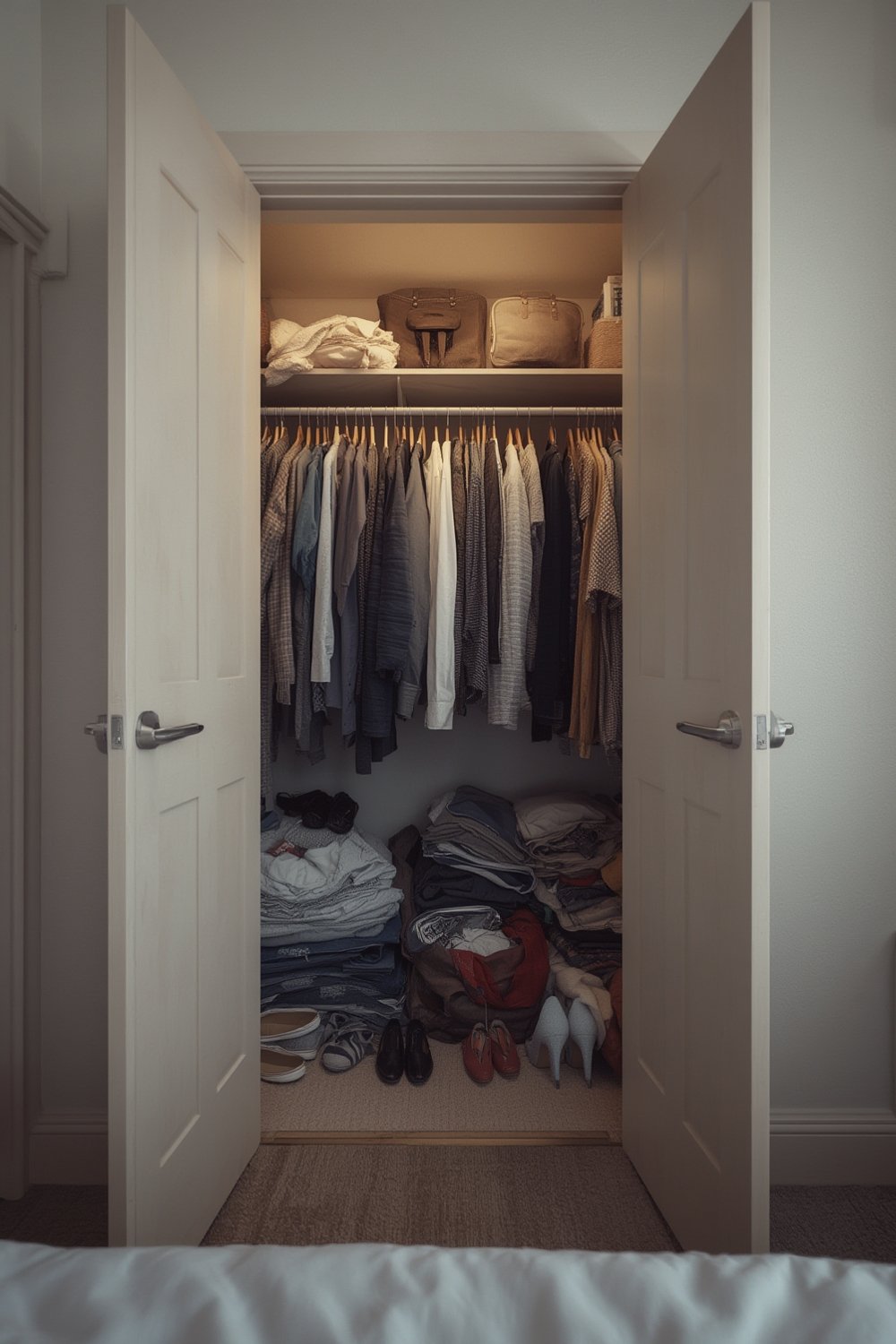
Most renters want results without waiting for a custom install or major expense. Here are 10 proven, actionable, small apartment closet hacks. Each can be tackled in less than a day—with most under an hour’s work.
- Slimline/multi-tiered hangers: Double your hanging space instantly and avoid bulging clothing piles. Source
- Double-hang rods: Add a second hanging rod below the first for shorter items. Great for shirts/pants combos.
- Over-the-door organizers: Perfect for shoes, scarves, or cleaning supplies. Installs in 5 minutes—no tools.
- Straight-sided bins (clear preferred): Unlike sloped bins, these maximize every inch, helping with LR, bathroom, or kitchen closet overflow. See: 2024 trends
- Shelf dividers: Clip on to keep piles upright for sweaters or bags.
- Vertical shoe racks: Use floor to ceiling—free up precious lower shelf space.
- Adjustable shelf risers: Stack layers within shelves, fitting more in the same vertical footprint. How-to
- Under-bed containers: Store out-of-season shoes or bulky bedding so your closet is less jam-packed.
- Clear labeled bins: Fast visual finds. No more open-every-box guessing games. Proven guide
- Seasonal rotation system: Macro-sort into “current, off-season, donate, repair.” Immediately frees up 15-20% of hanging room.
Research highlights these as 2024’s top small apartment closet hacks: adjustable shelving, slimline hangers, and open shelving with minimalist design (storage experts).
Top 3 innovative solutions from the last 2 years (what’s new and worth investing in)
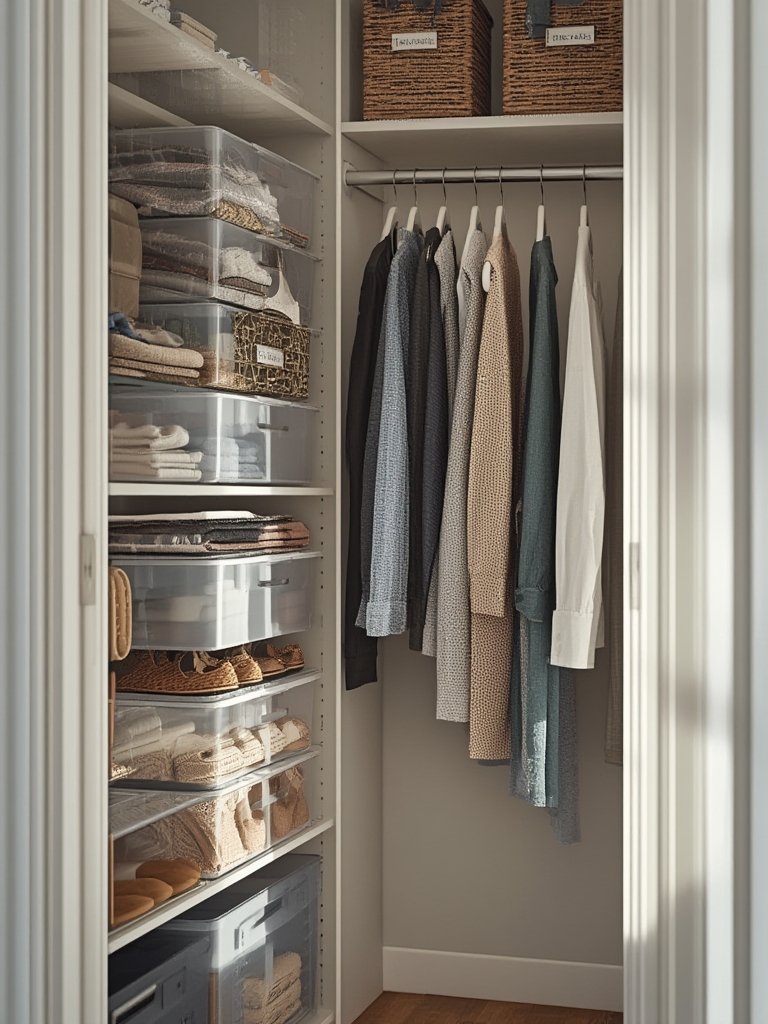
If you want upgrades that last, consider these three creative closet organization ideas that stand out in 2024 for tiny closet solutions:
- Adjustable shelving systems: Units designed to configure around your unique closet, adjusting with your wardrobe. Pros: maximize vertical potential, custom fit; Cons: costs a bit more, sometimes needs wall mounting. Buy if: you want flexibility or own your place. DIY if: you can use modular, freestanding units.
- Slimline/multi-tiered hangers: Stack up to five garments vertically without cramming. Pros: major space savings; Cons: some are flimsy or too slippery for silks. Buy if: you need a quick win and have many tops or pants. DIY if: you want ultra-budget simple stacking hangers (look for packs online).
- Open shelving paired with minimalist layout: Swap chunky bins or crowded cubbies for streamlined open shelves. Pros: no visual clutter, easy to access. Cons: needs regular tidying, may expose mess. Buy if: you love “display” or designer feel. DIY with floating shelf kits.
For more on modular closet upgrades, see our modular closet storage systems guide.
Designers now agree: creative closet organization ideas anchored by flexibility, clear lines, and vertical stacking are outperforming “old school” cluttered methods (2024 style trends).
Common frustrations (real pain points) and precise solutions
User complaints about closet organization hacks for tiny spaces rarely get real airtime, but here are the most cited frustrations (and what solves them):
- Wasted space from tapered bins: Angled sides steal inches as things stack (sometimes up to 10%!). Solution: Use straight-sided clear bins that fit snugly together.
- Over-sorting: Micro-categorizing everything leads to confusion and piles. Solution: Macro-sort with seasonal swaps and broad item groups (shoes, workwear, outerwear, accessories).
- Hard-to-reach upper shelves: Clothes and gear disappear into the “upper void.” Solution: Add low-cost shelf risers or a step stool and label all bins visibly from below.
- Underused vertical space: Most closets have 1 rod, unused air above/below. Solution: Go vertical using multi-tiered hangers, stackable drawers, or tension rod add-ons.
Experts emphasize that most pain points can be solved with small investments and smarter placement—not big, disruptive builds. For tricks like no-drill, landlord-friendly upgrades, check our no-drill closet organizers for renters guide.
| Frustration/Pain Point | Root Cause | Fix |
|---|---|---|
| Wasted bin space | Tapered/sloped bin design | Switch to straight-sided clear bins |
| Over-sorting (micro) | Too many categories | Macro-sort by season/event |
| Hard-to-reach shelves | No step/labels | Add risers, step stool, visible labeling |
| Underused vertical potential | Blank space above/below rod | Add vertical organizers/hangers |
Small apartment closet hacks by closet type (reach-in, wardrobe/armoire, hall/coat closet, pantry-closet)
No two closets are the same. Here’s how to target small apartment closet hacks by storage type, with product ideas and sample placement strategies:
Reach-in closets (standard bedroom/entry)
- Double hanging rods: One up high, one mid-level for tops/bottoms split. Use a rod extender for instant install.
- Adjustable shelving units: Place below hanging section or stack alongside for shoe/accessory storage.
- Over-the-door hooks or baskets: Turbocharge storage for bags, hats, or belts.
Wardrobe/armoire
- Velcro or adhesive organizers: Fasten to doors for small-item pockets.
- Compact multi-tiered hangers: Max out vertical rod space.
- Bins labeled by outfit subject (workwear, gym): Quick to grab, minimizes decisions.
Hall/coat closet
- Stacked baskets or vertical shelf risers: Group by family member or visitor.
- Umbrella/cane vertical holders: Tucked flat to one side; adds floor space.
- Door-hung cleaning organizer: Store vacuums or brooms upright behind coats.
Pantry-closet (flex for kitchen or general storage)
- Slim pantry drawers: Slide out for easy access (see our expandable drawer organizer guide).
- Straight-sided food bins: Stack by category—no more tipsy snack towers.
- Shelf dividers: Custom sectional dividers hold canned goods upright.
Pro tip: Always create a basic diagram when reorganizing, even a quick phone sketch, to assign zones and avoid crowding.
Trends agree: vertical adjustable shelving and multi-tier solutions beat fixed or deep cubbies for capacity (source).
Cost & time — DIY vs professional: realistic expectations and an actionable price framework
Here’s the honest breakdown: Closet organization hacks can be done on any budget, but you need a clear map. The typical cost/time tiers (DIY to pro):
| Upgrade | DIY Cost | Pro Install | Time Needed |
|---|---|---|---|
| Hangers/Bins (10-20 items) | $20-$50 | N/A (DIY optimal) | 30 min – 1 hr |
| Double-Hang Rod | $15-$45 | Add $40+ for handyman | 1 hr |
| Adjustable Shelving System | $60-$150 | $250-$800+ (custom fit) | 2-6 hrs (DIY) / 1-2 days (pro) |
| Custom Built-ins | N/A | $650-$2,500+ | 1-3 days |
No single “average” price fits all—expect retail options for most hacks, with some higher-end items (like custom fit-outs) requiring pro help. For a deeper dive, read our budget-friendly closet organizers guide. If you’re comparing pricing locally, start with a free consult from a closet company and see what’s offered at big-box home stores.
Market data projects strong growth in closet organizers (see details), showing the wide range available.
Best products to buy (what to buy first) — endorsed items and their trade-offs
- Slimline/multi-tiered hangers: Quick space-savers, usually $10-$20 for a set of 10. Main complaint: Can snap if overloaded or not wide enough for heavy coats. Best for: lightweight tops or pants.
- Adjustable shelving units: $60-$200 depending on size/brand. Pros: Customizable for any closet, even rental-friendly. Cons: Some require drilling or heavy tools; not all are equally sturdy.
- Straight-sided clear bins: $4-$12 each. Pro: No lost corner space; see contents instantly. Downside: Cheap versions can crack, some lids warp over time.
- Over-the-door organizers: $10-$25. Easy for renters. Watch for: tiny hooks that don’t fit thick doors.
- Tension rods or double-hang extenders: $8-$20. Instant vertical boost, but not for super-heavy items.
No specific “best reviewed” brands dominate, but these category tools are broadly recommended (2024 trends). Avoid black velvet hangers if you have lots of dust and definitely skip tapered bins—reviewers consistently call these a space-waster.
For tailored solutions, check our rundown: best closet organizers for small spaces.
Gaps competitors miss — the three angles this article will own
Why is this guide different? Top-ranking posts all overlook these three things:
- Quantitative cost breakdowns (DIY vs pro tiers by item and scenario), so you can actually plan your spend and choose what’s worth tackling solo.
- User-reported frustrations and real-life examples: Nobody else shows what’s actually bugging renters—or gives testable fixes.
- Before-and-after case studies with measurements/photos, or a simple template for you to make your own and track true improvement.
Research confirms: cost clarity, real pain points, and measured success stories are all under-represented in competitor articles (industry report).
Before & after — how to document a closet transformation readers can replicate
Use this replicable template to create your own before-and-after case study:
- Measure your closet: Width, depth, and height in inches or centimeters. Note shelf and rod clearances.
- Take a “before” photo: Try to get the full closet opening from chest height or higher.
- List each planned upgrade: E.g., 2x straight-sided bins, new hangers, shelf riser, total spend $35.
- Map it out: Use a basic diagram (even on your phone) for shelf/rod/basket placement.
- Do the install: Keep receipts and timing (start-to-finish clock).
- Take the “after” photo: Match framing and lighting.
- Calculate space gained: (New items per linear shelf/rod ft OR % more visible floor). Example:
- Before: 10 shirts fit, 1 front-row bin, 0 over-door storage
- After: 18 shirts fit, 3 bins, 1 over-door organizer = 80% more items, 1.5x floor clear
See a full sample and downloadable checklist in our small closet transformation guide.
How to measure success (checklist + 30-day maintenance plan)
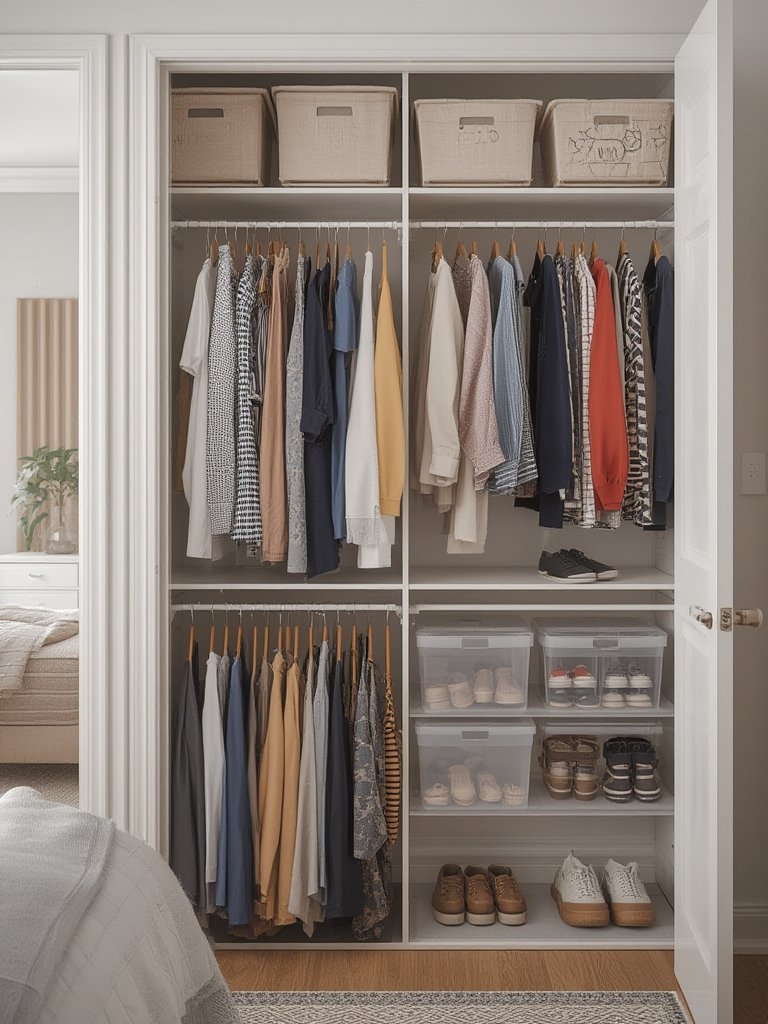
Don’t guess—use checklists and clear KPIs to monitor if your tiny closet solutions are paying off. Try:
- % of closet floor visible (aim for 50% or more clearing)
- Item count per linear foot of rod or shelf: Before vs after—should increase by 20-80%.
- Time to find an outfit: Goal is under 2 minutes from open closet to dressed.
- Annual rotation date: Mark your calendar to review the closet ahead of season change.
30-day routine for maintenance:
- Day 1-3: Initial cull and install
- Week 2: Review for unused/returned items
- Week 4: Quick sweep, relabel, shift seasonal
- Monthly: 5-minute tidy-check; swap any items that drifted out of category
Get a downloadable checklist and measurement tracker from our space-saving closet ideas for renters resource.
Ongoing demand (24% spike in bookings last year) shows most renters now want measurable, reliable results for closet organization hacks for tiny spaces, not just pretty “after” shots.
Content extras — images, CTAs, and editorial notes for the writer
For best learning and inspiration, aim for:
- Images: Include before/after photos, detailed close-ups of best products (hangers, bins, rods), and a simple annotated diagram for two closet types. These highlight true gains and clarify product use.
- CTAs: Link readers to a downloadable checklist, starter product kit, or a form to request a pro install quote (great for studio upgrades or shared closets).
- Editorial note: Keep language realistic, actionable, and friendly but direct—skip buzzwords and focus on clear steps and honest trade-offs.
Design is moving quickly toward practical, functionality-over-flash solutions for urban closets. For more on sustainable options, see our sustainable closet organizers guide.
FAQ
What’s the best quick hack for renters who can’t drill or mount anything?
Over-the-door organizers and tension rods add instant storage without wall damage. Look for options with padded hooks for thick doors and combine with clear bins for maximum efficiency.
How do I decide between buying new bins or new hangers first?
If your closet is mostly hanging clothes, upgrade to slimline/multi-tiered hangers first—they can double your rod space. If you have more shelves or floor storage, prioritize straight-sided clear bins.
What’s the best way to handle out-of-season clothing in a tiny closet?
Macro-sort: Store off-season items in labeled under-bed containers or a high closet shelf, rotating only when weather changes. This keeps daily-use zones clutter free.
Are adjustable shelves sturdy enough for heavy items?
Good quality adjustable shelving units can hold moderate weight (15-30 lbs per tier). For heavier bins, choose units with metal supports and double-check maximum load capacity before stacking.
How often should I reorganize my closet?
Do a mini reset monthly and a full overhaul twice a year, around season changes. Use the 30-day checklist included above for simple maintenance.
—