Table of Contents
Closet storage for small apartments is one of the highest impact ways to solve everyday clutter headaches for renters and owners in dense urban settings.
Key Takeaways
- Maximize vertical and modular storage solutions in your closet—these systems now make up 64.1% of the organizer market and are preferred by renters for flexibility and ROI (source).
- Focus on non-permanent, renter-friendly upgrades like tension-rod rails, stackable cubes, and over-the-door systems for maximum usability without wall damage.
- Document your before-and-after metrics (like linear feet of usable hanging space) to prove the impact and guide future improvements.
Why closet storage for small apartments matters right now
Urbanization and shrinking residential footprints have made efficient closet storage for small apartments an urgent need in 2024. The global closet organizers market is valued at USD 4,033.3 million in 2025 and is projected to reach USD 8,529.7 million by 2035, growing at 7.8% CAGR (source). Renters and owners in cities from Tokyo to Toronto now need compact storage solutions that adapt to limited square footage, move easily, and maximize every vertical inch. Minimalist design and multi-use modular systems are dominating new product trends.
Biggest pain points apartment dwellers have with traditional closets
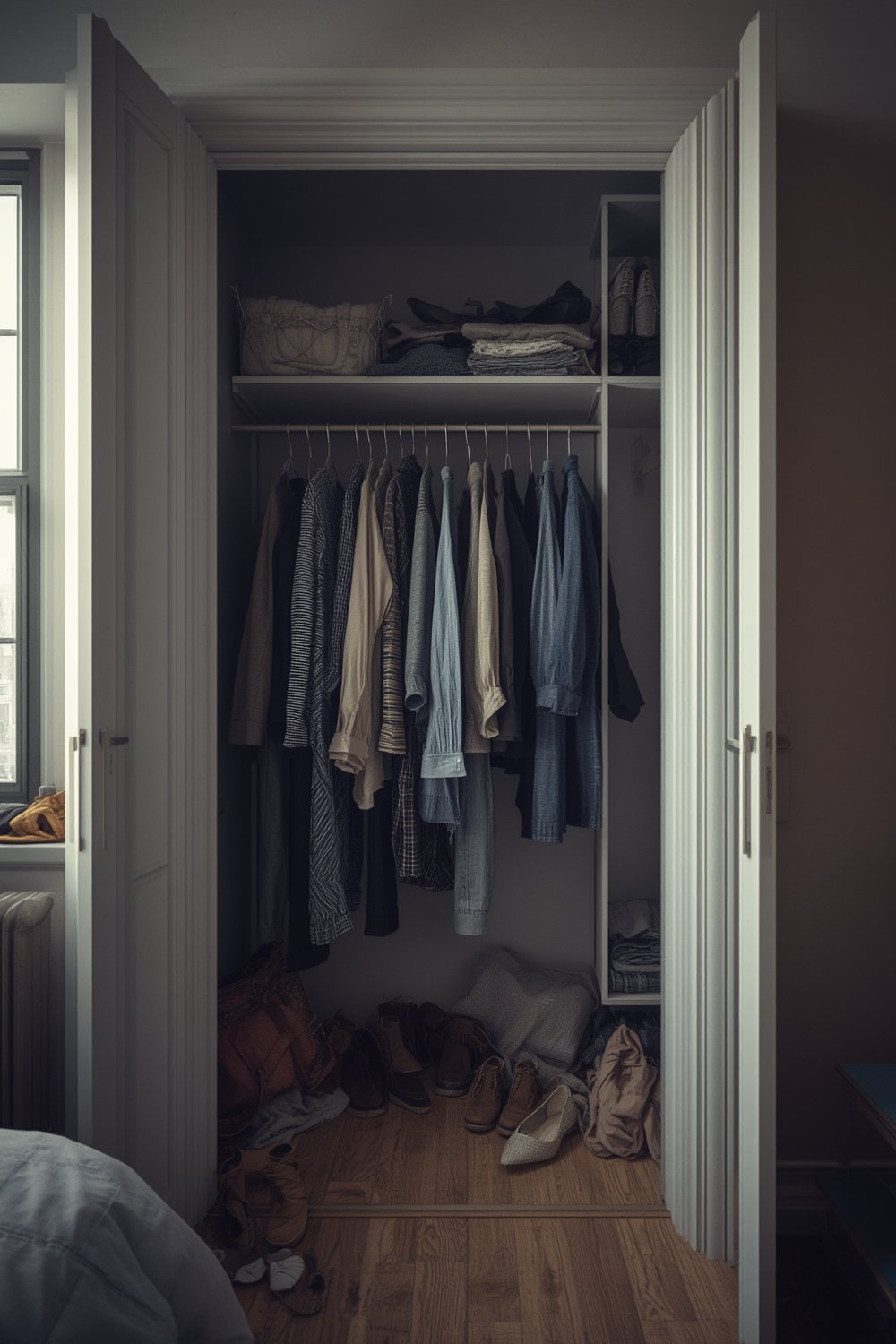
Most traditional closets in urban apartments waste vertical space and rely on bulky fixed shelves or rods. Common complaints include:
- Too many fixed shelves, not enough hanging or adjustable options
- Disorganization—clothes/sheets lost in piles or on hard-to-access top shelves
- Poor use of doors and wall space for accessories or shoes
- Lack of flexibility for renters—permanent fixtures or drilling may void leases
Recent studies reveal that some cities have only 1 to 3.7 square feet of storage per capita (Springfield, MA at 3.7 sq ft/capita) compared to a national benchmark near 7 sq ft (source). That gap is driving demand for creative apartment closet ideas and modern space-saving apartment closet organizers.
The one trend you must design for: vertical + modular first
If you want smart closet storage for small apartments in this decade, the strategy is clear: go vertical and go modular. Floor-to-ceiling shelving units, adjustable rails, clean-profile stackables, pull-out shoe or pants racks, and overhead bins unlock the full height of any closet without gobbling precious floor space.
Shelving units will capture a 64.1% market share in 2025, outpacing drawers, baskets and other solutions (source). 2024 trends emphasize pull-out racks, adjustable shelving, and smart vertical use as renters and owners seek minimalist, vertical storage solutions that can move when you do.
Top 7 renter-friendly closet solutions (practical, non-permanent)
- Tension-rod double-hang setups:
Install a second, adjustable rod below your main one for double the hanging space—no drilling required. Watch for sturdy-fitting end caps to prevent slipping.
Pros: Doubles usable space. Easy install/removal.
Cons: May not support very heavy loads. - Modular shelving cubes:
Lightweight plastic or fabric stackables act as shelves or baskets. Arrange to fit odd corners or combine with hanging rods. No tools needed.
Pros: Highly customizable and mobile. Good for folded items or shoes.
Cons: Some cheaper sets can sag with weight. - Over-the-door organizers:
Fabric or plastic organizers hang over the closet door for shoes, accessories, or cleaning products. Require zero wall hardware.
Pros: Adds instant pockets. No damage.
Cons: Doors may not close flush with thicker organizers. - Stackable shoe bins:
Clear bins or boxes stack on closet floors and make shoes visible—not buried. Choose locking lids for transport.
Pros: Frees lower shelf space. Easy to move.
Cons: Needs accessible floor space. - Hanging shelves:
Fabric shelves attach to any closet rod and hold sweaters, pants or small linens. Fold flat when unused.
Pros: Grows/shrinks with your needs. Simple to pack for a move.
Cons: Lower shelves may sag with heavy items. - Freestanding narrow drawer towers:
Slim towers with drawers fit in standard closets—no installation. Perfect for socks, underwear, or office supplies.
Pros: No wall contact. Adds drawers where none exist.
Cons: Reduce floor clearance for tall boots/bags. - Adhesive-mounted hooks & pegs:
Damage-free stick-on hooks can hold bags, hats, scarves, or jewelry on side walls or doors.
Pros: Maximizes unclaimed wall areas. Removes cleanly.
Cons: Weight limits—usually under 5 lbs per hook.
Research confirms shelving and modular units are preferred for renters due to their adjustability, stackability, and easy removal (source). For more on smart, no-drill options, read our guide to no-drill closet organizers.
Owner-focused upgrades that justify a higher spend
If you own your apartment or home, investing in permanent compact storage solutions brings long-term value and customization. Options include:
- Custom built-in wardrobe systems—Maximize every corner with floor-to-ceiling cabinetry and drawers made to measure for your space
- Integrated or under-shelf LED lighting—Improves visibility and organization, favored in higher-end apartments
- Permanent pull-out racks, drawers or valet rods—Smoothly access shoes, handbags, or pants without clutter
While renters favor non-permanent modular organizers, owners drive demand for built-ins and integrated features (market segmentation source: report).
Costs, budgeting, and realistic ROI expectations
Budgeting your upgrade depends on whether you choose DIY modular pieces or invest in semi-custom installs. Here’s a simple breakdown:
- Low cost: $20–$60 for tension rods, stick-on hooks, basic cubes or over-the-door organizers
- Mid cost: $60–$250 for modular shelving kits, stacking systems, premium hanging organizers
- High cost: $500+ for semi-custom drawers, lighting, wall-mount modular rails, or built-ins
Direct 2024 cost/ROI numbers are missing in public research, but major market growth (from $4,033.3M in 2025 to $8,529.7M by 2035) proves consumer appetite for these upgrades. ROI comes through improved daily usability, increased perceived apartment value, and, for landlords, faster rental turnover. Optimize ROI by upgrading high-friction closets first and starting with products you can reuse in your next place. For more budget-friendly tips, visit our resource on cheap small closet organizers.
Measurable before-and-after case study framework (how to document wins)
There’s a lot of hype about transformation, but real before-and-after data on closet storage for small apartments is still rare in 2024. To prove the impact, use this framework when making upgrades or sharing content:
- Document pre-upgrade storage: Take clear photos and measure linear feet of shelf and hanging space used
- Track vertical utilization: What percent of your closet height is actually in use before and after?
- Inventory lost/found items: Did you find clothes lost for months? Track the number
- Visual staging: Take after-photos that match your “before” angles for clear comparison
Case study stats are almost non-existent in current research, but following this template will help you build one—plus set a new benchmark for the community. For inspiration, check out our how-to’s on apartment closet ideas and space-saving closet organizers.
Three essential apartment closet ideas competitors overlook (opportunity plays)
- Smart tech upgrades: Motion-sensor LED strip lighting, auto-dim features, and even charging ports are appearing in higher-price city apartments but are not yet widely covered. See our guide to smart closet organizer tech.
- Eco-friendly, recycled modular stackables: Organizers made from recycled plastics, bamboo, or reclaimed wood (trending sharply in the UK/EU) offer both sustainability and style. For more tips, see our resource on sustainable closet organizers.
- Region-specific low-cost hacks: Over-the-door rails and foldable hanging shelves, now trending in Asia-Pacific and India through e-commerce platforms, help maximize storage where every inch matters.
Most competitor articles fail to cover these three trends, missing major opportunities mentioned in research for 2024 (source).
New & notable products/technologies (2025–2026): what to recommend and test
Looking to stay ahead? These innovations are reshaping closet storage for small apartments in 2025:
- Pull-out shoe racks and sliding pants organizers—save floor and entry space
- Multi-tier hangers and telescopic rails—stack 2–5 garments vertically
- Integrated LED shelf systems—improves low-light nooks (especially in deeper reach-ins)
- Biophilic touches—add bamboo, wood, or green elements for a calming, upgraded feel
No single brand dominates (2025–2026) but look for systems offering true modular interchangeability and compatibility with most closet sizes. Always check for verified weight limits and returns policy. For a deeper dive, see our picks for the best closet organizers for small spaces.
Step-by-step implementation plan for a 1-hour, 3-hour and weekend closet makeover
Whether you have an hour before guests arrive or a full weekend to devote to upgrading, here’s how to make meaningful progress:
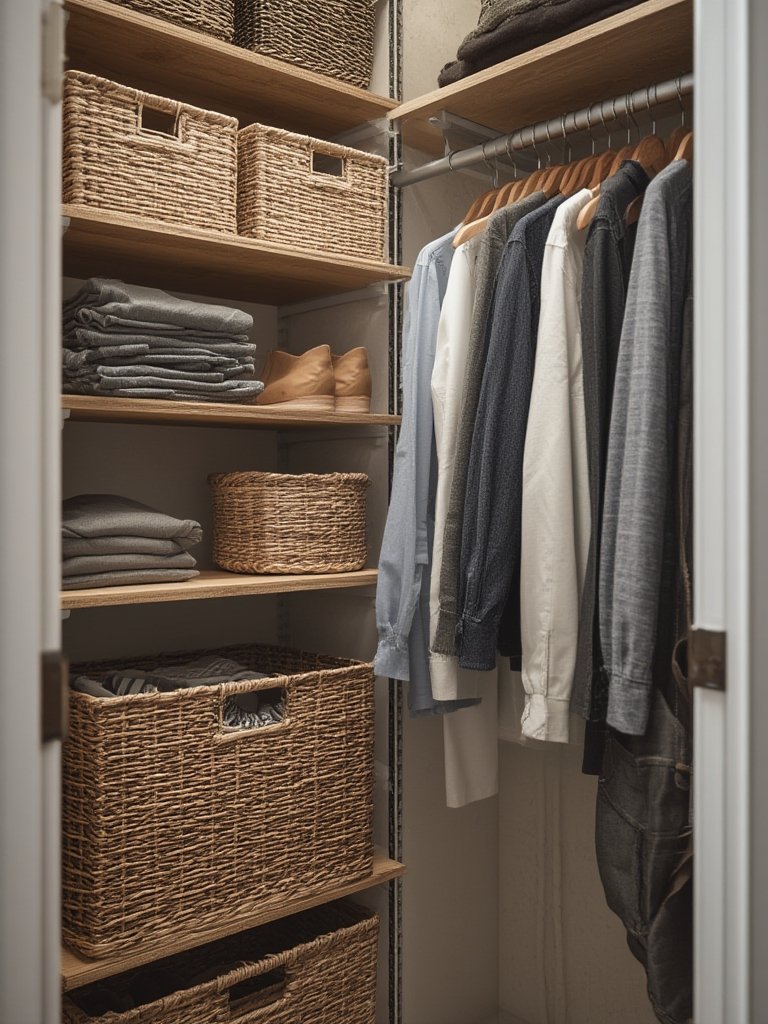
- 1-Hour Makeover (Express): Remove everything. Declutter 1–2 hanging categories. Hang an over-the-door organizer for shoes, scarves, or cleaning caddies. Stick adhesive hooks inside door for belts and everyday bags.
- 3-Hour Makeover (Standard): Complete the above steps, then add tension-rod double-hang rails, assemble at least one set of modular cubes, and re-sort by priority (e.g., work clothes up high, everyday items in front).
- Weekend Transformation: Install full modular shelving or stacking drawer systems. Add in motion-sensor LED strips, swap heavy winter gear into bins, and run inventory/documentation for a personal case study.
Shopping list (renter and owner options):
- Tension rods (different lengths)
- Modular cubes/cubbies (plastic, bamboo, or recycled)
- Over-the-door organizers (with metal or fabric hooks)
- Adhesive hooks/pegs
- Stackable, clear shoe bins
- LED stick-on lights (motion or touch)
- Freestanding drawers/towers
For more product-specific hacks check our guide to space-saving closet ideas for renters.
How to tailor solutions by region and household type (single, couple, family)
What works in one city may flop in another. Here’s how to localize your compact storage solutions:
- Asia–Pacific: Fastest-growing market due to smallest average living spaces. Frugal renters love adjustable rails, foldable racks, and multi-use over-the-door organizers (easy online access).
- North America: Highest adoption of modular shelving and smart closet tech features (8.2% CAGR). Look for plug-and-play LED strips and customizable stacking units.
- UK/EU: Preference for stackable drawers and eco-friendly organizers—look for recycled plastics or bamboo, and designs that maximize every nook.
Single adults: Prioritize double-hang and vertical shelf space.
Couples: Add drawer towers for shared items and separate modular sections to minimize friction.
Families with kids: Go for easy-access bins on lower shelves and extra adhesive hooks for accessories or backpacks.
For proven family-friendly organizer picks, check out our small closet organizer systems guide.
Quick buyer’s decision matrix and FAQs to include
| Use Case | Budget | Renter/Owner | Best Solutions | Notes |
|---|---|---|---|---|
| Clothes-heavy (shirts, dresses) | Low/Medium | Renter | Tension rods, hanging shelves, modular cubes | No tools required; double vertical usage |
| Shoes & accessories | Low | Renter/Owner | Over-the-door racks, stackable bins, adhesive hooks | Instant install/removal |
| Maximum ROI (long term) | High | Owner | Built-in cabinetry, integrated LED, pull-outs | May require contractor; increases property value |
| Eco-friendly goals | Medium | Renter/Owner | Recycled stackables, bamboo dividers | Reusable, sustainable, often modular |
Market research validates shelving units’ dominance (64.1% share in 2025), making shelf-based options smart for most use cases (source).
Closing — next steps and how to measure success after upgrades
Maximizing closet storage for small apartments is a rapidly growing priority worldwide. Whether you rent or own, focusing on vertical, modular, and sustainable compact storage solutions brings measurable benefits. Track success by measuring increased hanging space, reduced clutter, floor space reclaimed, and faster daily item access. Document your before-and-after, and share photos or tips to help others upgrade.
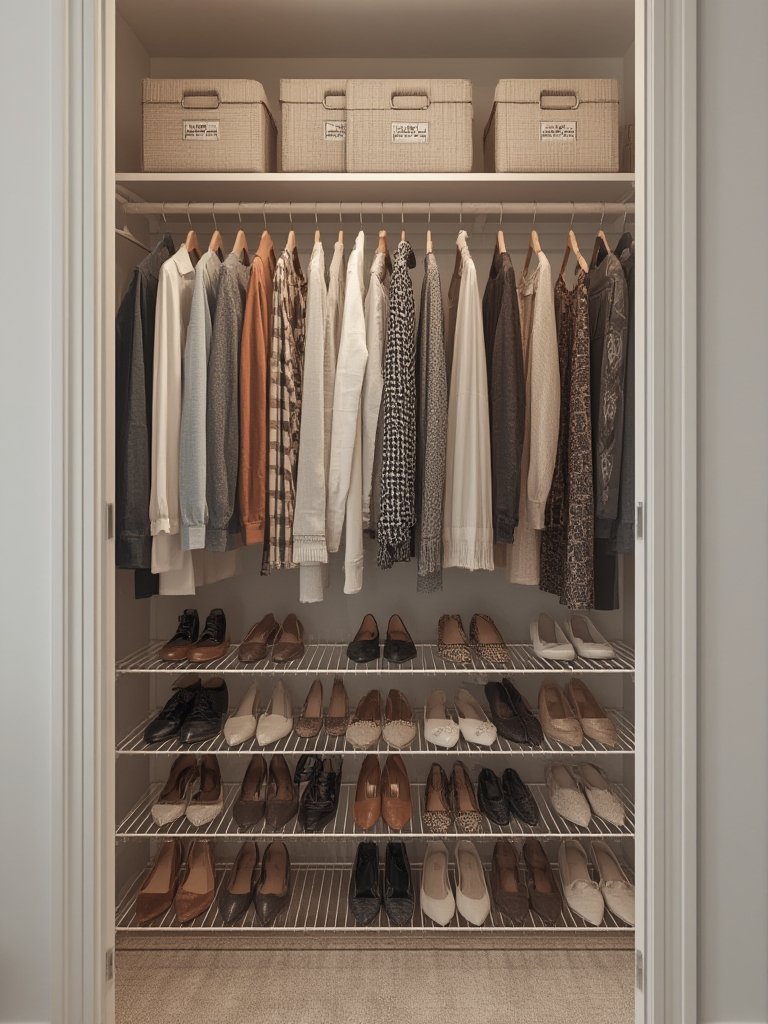
Ready to start or want to share your transformation? Explore advanced guides or contribute your real-world case study to our community. Every small change adds up to a calmer, more functional home.
FAQs
Are modular closet organizers damage-free for renters?
Yes, most modular organizers like tension rods, cubes, and over-the-door racks require zero drilling or wall fasteners and can be removed without leaving marks. Always follow manufacturer install guidelines.
How do I measure my closet to buy the right organizer?
Measure height, width, and depth (not just hanging rod length). Note door clearance for over-the-door racks and account for baseboard moldings.
Is it worth investing in higher-end closet storage solutions as a renter?
If you move often, choose modular options you can reuse. Higher-end pieces make sense for long leases or if you’ll repurpose them in your next place.
Can I return a closet organizer if it doesn’t fit?
Check return policies before purchasing, especially for custom or assembled products. Keep packaging and measure your space first to avoid fit issues.
What’s the best way to clean and maintain small apartment closet organizers?
Wipe shelves and cubes regularly with a damp cloth. Avoid overloading hangers or adhesive hooks, and re-tighten adjustable rods every few months.